
Project Abstract
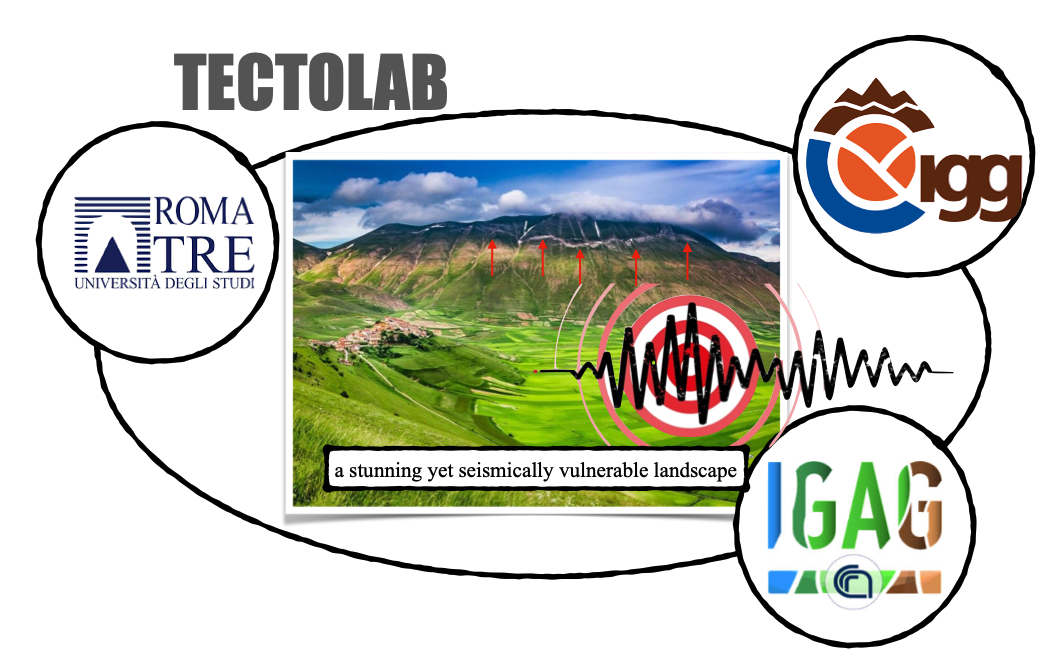
TECTOLAB is a national research infrastructure designed to advance the understanding of earthquake processes through the integration of analog modeling, numerical simulations, and geophysical observations. The project is inherently cross-disciplinary, combining expertise in tectonics and structural geology, seismology and geophysics, engineering and applied physics, computer science, and material science. By developing innovative laboratory setups that simulate seismic cycles across different tectonic regimes, TECTOLAB bridges experimental and theoretical approaches, enabling the study of fault mechanics, rupture dynamics, and seismic hazard in a controlled and reproducible framework.
Objectives
TECTOLAB will establish an integrated experimental platform for modeling earthquake processes in extensional, strike-slip, and convergent tectonic settings. This will be achieved through the design and upgrade of analog modeling apparatuses across three differenet institutions. The project aims to investigate key scientific questions, including the mechanisms of earthquake nucleation, the transition from slow to dynamic slip, and the role of structural and frictional heterogeneities in controlling rupture propagation. Additionally, TECTOLAB seeks to couple experimental results with numerical models and apply them to well-constrained natural case studies, improving the physical understanding of seismicity and its variability.
Expected Results and Impacts
TECTOLAB will develop and upgrade three advanced experimental infrastructures for modelling earthquakes. The project will generate long-term synthetic seismic catalogs, open-access datasets, and standardized protocols to ensure reproducibility and data sharing. These outputs will significantly enhance the capability to interpret complex tectonic processes and improve seismic hazard assessment. At a broader level, TECTOLAB will strengthen national and international collaboration, support interdisciplinary training, and reinforce Italy’s role in European research infrastructures, particularly within the EPOS framework.
Project team
The project is led by Fabio Corbi (CNR IGAG) and involves a multidisciplinary team including Marco Bonini (CNR IGG) and Francesca Funiciello (Roma Tre University). The collaboration brings together complementary expertise in experimental tectonics, seismology, and geodynamics, supported by strong links to national and international research initiatives.