
Project Abstract
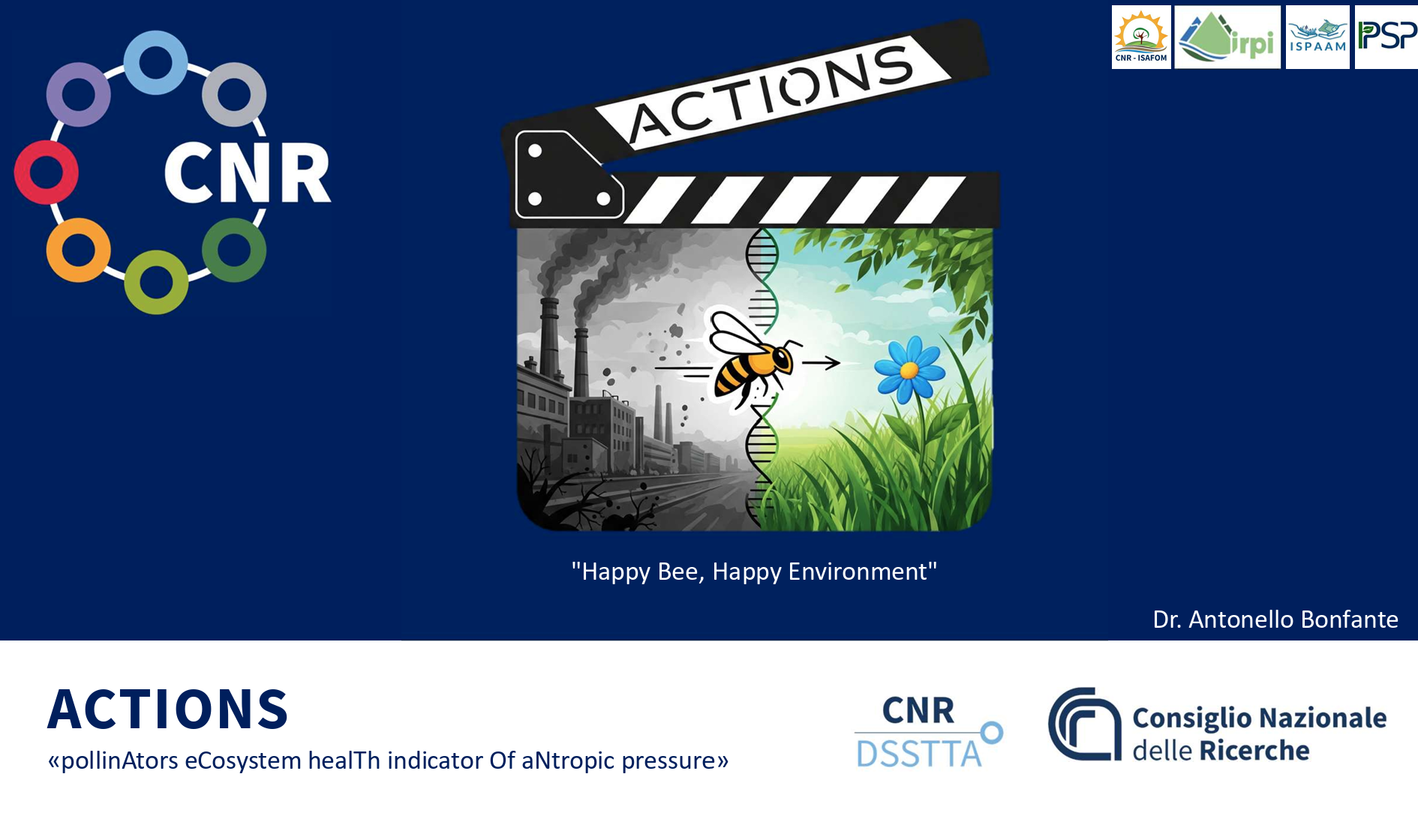
The main objective of the ACTIONS project is to develop new diagnostic bio-indicators to recognize the relationships between the level of anthropic pressure and ecosystem health, which is defined by the ability of pollinators to carry out their ecosystem services. The project aims to develop new diagnostic indicators of ecosystem health based on the effects of anthropic pressure on the pollinators’ well-being and their ecosystem services. To achieve this, a multidisciplinary approach will be implemented, combining GIS environmental analysis, the use of molecular biomarkers, and the evaluation of pollinator functions under different environmental pressure conditions. Particular attention will be given to telomere length (TL) as a molecular biomarker to analyze pollinators’ well-being and ecosystem function. Human impact will be assessed by integrating and analyzing various environmental information layers such as land use, biodiversity indices, and climate indicators using GIS. The final goal is the definition of an Ecosystem Health Index (EHI) that is applicable and transferable to other environmental contexts.
Team composition
The transdisciplinary project team includes researchers from two CNR departments (DSSTTA and DISBA). The CNR’s institutes involved are:
- CNR-ISAFOM (Institute for Mediterranean Agricultural and Forest Systems, DISBA): Specializes in integrating environmental data, land evaluation, and conducting detailed field surveys (UAVs), which is crucial work for understanding geo-biodiversity and the effects of anthropic pressure on ecosystems.
- CNR-IRPI (Research Institute for Geo-Hydrological Protection, DISBA): A leader in environmental analysis and the characterization of geodiversity , ensuring comprehensive GIS analyses of anthropic pressures on ecosystems.
- CNR-IPSP (Institute for Sustainable Plant Protection, DSSTTA): An expert in pollinator health and biodiversity, focusing on the morpho-physiological and molecular impacts of stress factors. It leads the evaluation of pollinator ecosystem services.
- CNR-ISPAAM (Institute for Animal Production System in the Mediterranean Environment, DISBA): A pioneer in genomic biomarker research, particularly in telomere length analysis in various organisms, providing innovative tools for assessing pollinator well-being.
Key members involved
The key members are:
- Principal Investigator (PI): Antonello Bonfante (CNR-ISAFOM): Research director at ISAFOM institute, specializes in integrating environmental data, land evaluation, and conducting detailed field surveys (UAVs). His work is crucial for understanding geo-biodiversity and the effects of anthropic pressure on ecosystems.
- Co-Principal Investigator (COPI): Massimiliano Alvioli (CNR-IRPI): Senior researcher at IRPI institute, leader in environmental analysis and the characterization of geodiversity. His expertise ensures comprehensive GIS analyses of anthropic pressures on ecosystems.
- Team Member: Gennaro Di Prisco (CNR-IPSP): Senior researcher at IPS institute, expert in pollinator health and biodiversity, focusing on the morpho-physiological and molecular impacts of biotic and abiotic stress factors. He leads the project’s evaluation of pollinator ecosystem services.
- Team Member: Alessandra Iannuzzi (CNR-ISPAAM): Researcher at ISPAAM institute, pioneer in genomic biomarker research, particularly in telomere length analysis in various organisms. She provides innovative tools for assessing pollinator well-being.
Work package structure
The project is structured into 5 Work Packages:
- WP1: Management, coordination, and dissemination
- Focuses on coordinating project activities and disseminating scientific results.
- Lead: CNR-ISAFOM, co-lead: CNR-IRPI.
- WP2: Study areas environmental characterization and anthropic pressures definition
- Dedicated to the in-depth environmental analysis of the study areas to determine human impact.
- Lead: CNR-ISAFOM & CNR-IRPI.
- WP3: Pollinators ecosystem services evaluation
- Focuses on the study of pollinator ecosystem services in relation to their well-being.
- Lead: CNR-IPSP.
- WP4: Genomic biomarker set up on pollinators’ well-being
- Aims to define a genomic biomarker (based on telomere length) to evaluate the well-being of pollinators.
- Lead: CNR-ISPAAM.
- WP5: Data integration and Environmental Health Index (EHI) definition
- Integrates the data from the previous WPs (WP2, WP3, WP4) to define the Environmental Health Index (EHI).
- Lead: CNR – ISAFOM, co-lead: CNR-IRPI.
List of Planned Deliverables
- 1: Mid-term report (M12 – Month 12)
- 2: Final report (M24 – Month 24)
- 1: Maps of anthropic pressure on the environment of the selected study areas (M12 – Month 12)
- 1: Data set of molecular and physiological effects mediated by environment (M15 – Month 15)
- 2: Anthropic factors impacting immunity and ecosystem services (manuscript) (M24 – Month 24)
- 1: Protocol of a smart molecular biomarker for honey bees’ well-being (M18 – Month 18)
- 1: Maps of the EHI index of selected study areas (M24 – Month 24)
General Project Gantt Chart
The project has a total duration of 24 months. The general timeline for the main activities of each Work Package is as follows:
- WP1 (Management, coordination, and dissemination): Activities span the entire project duration, from month 1 to month 24.
- WP2 (Study areas environmental characterization): Activities are mainly concentrated in the first year, from month 1 to month 12.
- WP3 (Pollinators ecosystem services evaluation): Activities begin after the first six months and continue almost to the end of the project, approximately from month 7 to month 24.
- WP4 (Genomic biomarker set up): Activities start in the first semester and continue until the project’s conclusion, approximately from month 4 to month 21.
- WP5 (Data integration and EHI definition): Activities take place in the second year of the project, starting from month 12 until month 24.
